Experimental Design#
In data science, experiments are essential when we want to understand cause and effect rather than just correlation. Experimental design gives us a structured way to plan tests, collect data carefully, and draw conclusions we can trust. Data science is not only about analyzing data; it is also about generating the right data to answer meaningful questions. Whether the goal is to test a new website feature, evaluate a marketing campaign, or measure the effect of a medical treatment, well-designed experiments help us learn the most from the data we collect and establish cause-and-effect relationships.
While statistics and machine learning often look for patterns in existing data, experimental design asks a deeper question:
“What would happen if we changed something?”
To answer this question, we need a systematic process for comparing outcomes, controlling sources of bias, and making valid inferences from our results.
What Is Experimental Design?#
Experimental design is a structured method for planning, conducting, and analyzing experiments so that we can answer specific questions accurately and efficiently. In data science, this often involves:
Formulating a clear hypothesis
Selecting variables to manipulate and measure
Choosing a design that reduces bias
Collecting data in a way that supports reliable conclusions
Analyzing outcomes with appropriate statistical tools
At its core, experimental design ensures that the signal we want to detect is not drowned out by noise, randomness, or bias.
Why Experiments Matter#
In many real-world settings, observational data can tell us what has happened, but not necessarily why it happened. Experiments allow us to:
Test hypotheses
Compare alternatives (A/B testing)
Measure causal effects
Reduce uncertainty before deployment
Inform decisions with evidence rather than intuition
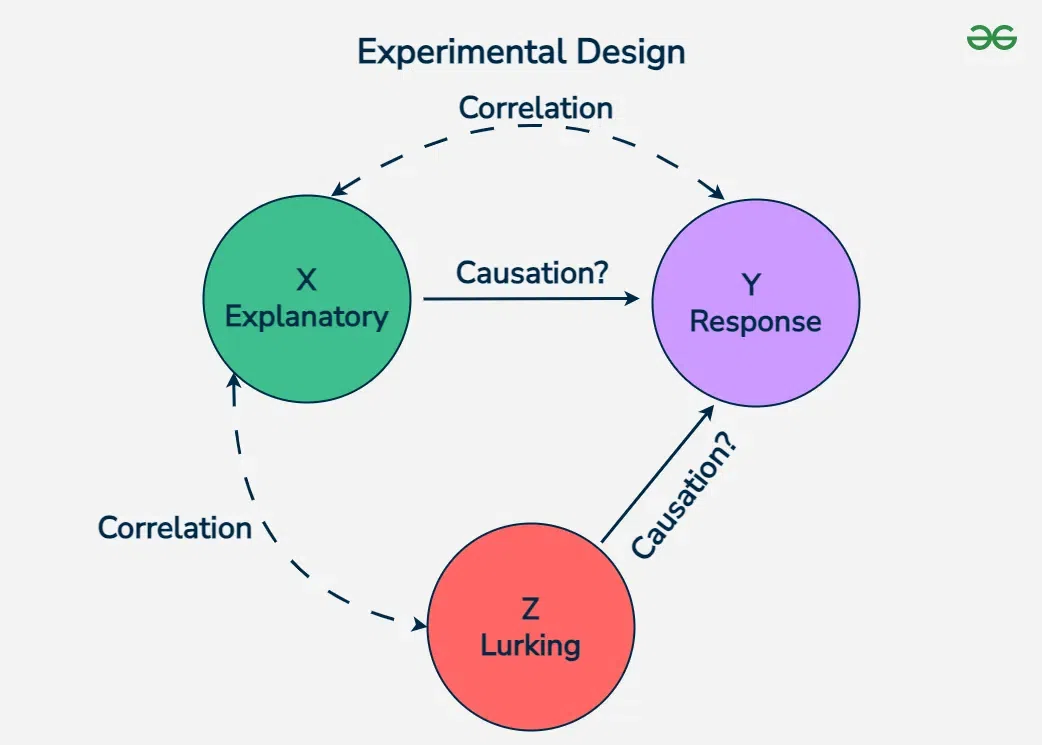
Figure 1. Experimental design concepts showing explanatory, response, and lurking variables.
Source: GeeksforGeeks (Experimental design explanation).
Tech companies such as Google, Amazon, and Netflix run thousands of controlled experiments each year to optimize recommendations, pricing strategies, user interfaces, and overall user engagement.
For organizations, good experiments reduce risk. Instead of guessing whether a new policy, product, or model will work, experiments let us try before we commit.
Experimental design provides the structure for collecting, comparing, and interpreting data in a reliable way. Without it, we risk drawing the wrong conclusions, wasting resources, or shipping products that don’t actually help.
Why Data Science Needs Experimental Design#
Experiments allow us to answer practical questions such as:
Which version of a webpage increases sales?
Will a new pricing strategy increase revenue?
Will students who study more get higher exam scores?
Many data science problems boil down to choosing the option that maximizes a desired outcome (e.g., click-through rate, revenue, accuracy, retention, or health outcomes). In other words:
Given multiple choices, which option leads to the best outcome?
To answer this effectively, we need a plan for:
what to measure
what to manipulate
how to collect data
how to avoid bias
how to deal with confounders
Together, these ideas form the foundation of experimental design and set the stage for how we use experiments in data science practice.
In this chapter, we will introduce the key components of experiments, discuss how to reduce bias, and explore how A/B testing is used widely across modern technology platforms.